Registration is Open!

Secure your seat today

We are excited to announce that registration is open for the 2025 AOC Cross-Agency Partnership Summit! This important meeting, hosted by the Ohio Lake Erie Commission, in partnership with U.S. Environmental Protection Agency, will take place from September 16-18, 2025.

This multi-day meeting will be held at the Glass City Convention Center in Toledo, Ohio. The meeting will bring together federal, state, and local AOC stakeholders to strengthen partnerships, find solutions, share lessons learned, and to engage in meaningful conversations that will progress work in Great Lakes AOCs.

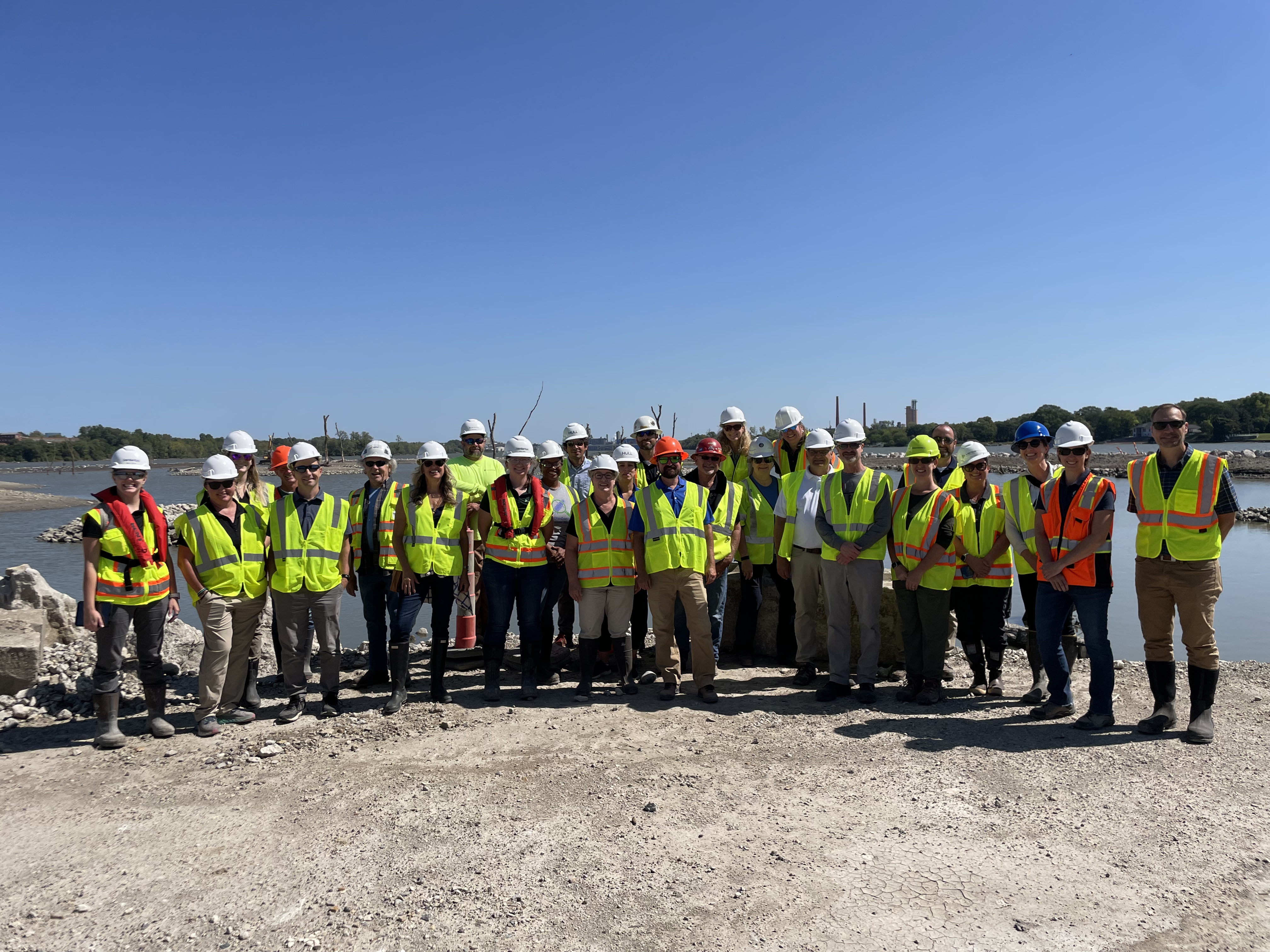
The event will commence on Tuesday, September 16th (12 p.m. EDT) with tours of restoration projects and lessons learned in the Maumee Area of Concern. It will continue September 17th and 18th with presentations, discussions, and a poster session. The meetings will conclude at approximately 1 p.m. EDT on Thursday, September 18th.

Online registration in encouraged by Monday, September 1, 2025, to secure a spot on one of the field trips and to be guaranteed meals that are included in the registration fee.

This three-day meeting is open to government officials, businesses, industries, universities, and other interested community members working toward restoring Great Lakes AOCs. AOC partners will be provided the opportunity to participate in engaging program planning and information sharing discussions, as well as inspiring and informative field trips.

There are three options for online registration:

Please note, there is no option to split payment at checkout. If you need to use a different method of payment for the $98 registration fee ticket and the $20 Wednesday Evening Reception ticket, these must be purchased in separate steps. Field trip selection will be made directly in Whova (on a browser or in the app). Instructions will be sent via email to registered participants.

The sponsorship packet is available to help your organization with budgeting and sponsorship decisions as to how you want to support this exciting opportunity. By supporting, you are showing your commitment to the restoration of the Areas of Concern and the hardworking individuals dedicated to protecting our shared Great Lakes water resources. Don’t miss the opportunity to be part of this vital effort!

Stay tuned for more updates as we continue to prepare for this exciting national meeting. We encourage all MAAC members and our partners to get involved, whether through planning, volunteering, or sponsoring. If you or your organization would like to contribute, please reach out to us at [email protected].

Visit the 2025 ACAPS website to learn more about what you can look forward to in September!

Milestone Reached!

Wildlife Management Actions Projects (WildMAPs) Completed

The Maumee Area of Concern (AOC) achieved a significant environmental accomplishment: the successful completion of all designated Wildlife Management Action Projects (WildMAPs), aimed at restoring habitat and addressing key ecological issues in the Maumee River and surrounding watershed areas.

Over the past seven years, a combined investment of more than $27 million—including over $19.3 million from the Great Lakes Restoration Initiative (GLRI) and an additional $8.4 million from other sources—was dedicated to restoring over 3,517 acres of wildlife habitat. This figure exceeds the initial goal by 90 acres. These projects directly targeted Beneficial Use Impairment (BUI) 14b: Loss of Wildlife Habitat, moving the Maumee AOC closer to removing this impairment.

This success builds on strategic planning efforts that began in 2015, when the Maumee AOC Advisory Committee (MAAC) brought together more than 30 regional stakeholders and scientists to identify restoration needs and recommend long-term, science-based solutions. From a broad review of potential efforts, the MAAC finalized a list of 20 wildlife habitat restoration projects. This proposal received approval from the Ohio EPA and the U.S. EPA’s Great Lakes National Program Office in February 2018, which paved the way for project implementation.

These habitat restoration projects, including grassland prairies, wetlands, and full forests, have significantly improved the region’s ecological health and support progress toward addressing BUI 14: Loss of Fish and Wildlife Habitat. While the WildMAPs are now complete, work continues on AquaMAPs, Sediment MAPs, and other projects which are essential for addressing the remaining six BUIs and eventually delisting the Maumee AOC entirely.

Summaries of all Maumee AOC Management Action Projects are available to view here. The Maumee AOC program is part of a broader initiative to restore severely degraded portions of Great Lakes watersheds. The program is primarily funded through the Great Lakes Restoration Initiative and is a collaboration of Ohio EPA and the Ohio Lake Erie Commission, in partnership with the U.S. EPA and local partners. For more information, visit https://maumeeaoc.org/.

2024 Annual Report is now available!

The Maumee AOC 2024 Annual Report is here! We’ve removed another BUI, expanded our outreach and education through the MAAC, and continue making solid progress on all the Management Action Projects. And with the spring weather warming up, things are really starting to pick up in the Maumee AOC! Read it here! A physical copy of the 2024 Annual Report is not currently available, so we encourage you to share the PDF link with peers, stakeholders, and anyone interested in the accomplishments within the Maumee AOC.

A Blast from the Past!

Who doesn’t enjoy a trip down memory lane? We’ve dusted off some classic issues of the Maumee River Remedial Action Plan newsletter from 1990, and we’re excited to share these throwback articles with you!! A lot has changed over the past 35 years, but these newsletters still offer valuable insights, familiar names, a great education content. Check it out!

As you browse through these pages from the past, take a moment to reflect on how far we’ve come in the Maumee Area of Concern. It’s inspiring to see the progress that’s been made and the dedication that continues to drive our efforts forward.

One quote from the January 1990 issue stands out: “Strong public involvement is the key to the successful development of the Maumee River Remedial Action Plan.” That message still holds true today. The MAAC’s Awareness, Outreach, and Education subcommittee is working hard to foster community engagement and raise awareness about the AOC, what it is, the work being done, and why it matters. We are looking for new members to join the subcommittee in this outreach effort.  Contact Mary Winkle at [email protected] if interested in getting involved.

So far this year, outreach events like the BGSU Eco Fair and UT Earth Fest, have been attended in partnership with PCS to share education and information on the Maumee AOC with the public. We’re spreading the word about the importance of restoring fishable, swimmable, and drinkable water in the Maumee River and its surrounding areas. Let us know if you have other ideas about how and where we can tell the story of our Maumee AOC activities and success!

A Look Back at 2024

2024 was a busy year for the Maumee AOC! We could go on and on about all the progress, completed projects, and groundbreaking that happened this year, but for now we’ll share some of the highlights.✨

MAPs and BUIs

  • BUI 7: Restrictions on Dredging Activities was removed!
  • Started construction for the largest known habitat restoration investment in the Maumee River: Clark Island and Delaware/Horseshoe Islands Water Quality & Habitat Improvement Projects.
  • Management Action Projects:
    •  Over 80 MAPs plus 20 GLLA cost-share projects
    • >$96M in projects funded since 2018
    •  $45M in MAPs are currently in progress
      • WildMAPs – 19 of 20 projects complete
      • AquaMAPs – 23 of 54-56 projects complete
      • SedMAPs – 3 of 8 projects complete
      • MiscMAPs – 1 of 1 project complete

Public Involvement and Outreach

  • Chosen as the AOC to host the 2025 Great Lakes Areas of Concern Conference!
  • Brought together a MAAC subcommittee for Environmental Justice/Diversity, Equity, and Inclusion.
  • Took part in several community outreach events, such as:
    • Inaugural Maritime Career Day hosted by the National Museum of the Great Lakes
    • 50th Anniversary Celebration for the Maumee Scenic River Designation
    • Live Stake Harvesting with TPS Students for the Hill Ditch Restoration
  • The MAAC maintained a robust social media presence throughout the year on Twitter / X and Facebook.
    •  Facebook reach (the number of unique users who see our content or page) increased by 254.5% and followers increased by 136.4%.
  • The 2023 Annual Report was published.

Join the Maumee AOC Advisory Committee (MAAC)

The Ohio EPA and Partners for Clean Streams invite passionate individuals to apply for the Maumee AOC Advisory Committee (MAAC). Find the application here.

If you’re committed to enhancing our region’s ecosystem health, we encourage you to get involved. MAAC advises state and federal partners on key projects to improve the Maumee Area of Concern (AOC) and represents community voices.

In the coming year, MAAC will work with the Ohio AOC Program to assess and address Beneficial Use Impairments (BUIs), raise awareness and increasing participation in communities facing higher environmental burdens, assist with the development and implementation of management action projects (MAPs) and assist with the 2025 Great Lakes AOC Conference. We play a vital role in engaging the community and ensuring public input in restoration efforts.

To apply for voting membership, please review the Expectations and Considerations for MAAC members on page 2 of the application packet. Non-voting Ex Officio and Resource Members can express their interest via email without a formal application. Submit your application form and any required letters of support by midnight Tuesday, November 12, 2024 to:

MAAC Member Application
c/o Partners for Clean Streams
via email to: [email protected]

Join us in making a difference for the Maumee AOC!

BUI 7 Officially Removed in Maumee AOC!

The Maumee Area of Concern and surrounding waterways are making progress towards their restoration goals thanks to recent developments. BUI 7: Restrictions on Dredging Activities has now been approved for removal from the list after acceptance from US EPA and the Great Lakes National Program Office (GLNPO)!

This is the fourth of ten beneficial use impairments (BUIs) impacting local waterways in the Maumee AOC that has been addressed. Due to recently dredged sediment being deemed clean for beneficial use, we are one step closer to delisting the Maumee AOC. Read the acceptance letter here.

The Toledo Shipping Channel, the most heavily dredged in the Great Lakes due to its shallow depth, contributes sediment that is now being utilized for various projects, including tree growth at Glass City Metropark and research at Bowling Green State University.

The ongoing improvements in restoring the AOC and eliminating BUIs are the result of efforts by local stakeholders, organizations, and state and federal AOC programs. Thank you to everyone who made this possible!

The full Removal Recommendation document can be found here, or by visiting the Resources page of https://maumeeaoc.org/.

Project Feature: Stream Restoration at Lathrop Park

Starting in 2021, a stream restoration project was developed for Lathrop Park located in Berkey, Ohio. The proposed work for this project includes restoration of 0.75 acres of riparian buffer, stabilization of 600 feet of eroding streambank, creation/enhancement of 165 feet of riffle habitat, restoring a riffle-pool sequence across the site, and enhancing in-stream habitat with locked logs, rock, and native plantings. These efforts are to address BUI 6: Degradation of Benthos and BUI 14a: Loss of Fish Habitat.

Grant funding for this project was awarded through US EPA’s Great Lakes National Program Office (GLNPO) from the Great Lakes Restoration Initiative (GLRI) to Ohio EPA. Partners for Clean Streams (PCS) was subawarded funding from Ohio EPA to assist in the engineering, design, and implementation of this project. As of April 2024, Katarina Kieffer has been appointed the new project lead for PCS as former Executive Director of PCS, Kris Patterson, has transitioned to a new role with the Ohio Lake Erie Commission.

PCS hired the Davey Resource Group (DRG) to collect data/survey the existing conditions, develop a final engineered design and obtain permits. All of which has been completed. Moving forward, DRG will be working with The Stanger Group to get construction underway during the summer of 2024. An initial round of tree and woody material removal was completed in March, as well as fact sheets and project FAQs mailed to Village of Berkey residents to inform them on the important work being done to the area. Invasive species control is also expected to be completed this Spring. The restoration elements of this project will enhance fish and benthic habitat by increasing stream shading, diversifying habitat elements, adding and enhancing riffle habitat, and by reducing bank erosion and subsequent siltation and embeddedness of stream substrate.

For more information, visit the Data Management & Delisting System (DMDS) page for this project: Stream Restoration at Lathrop Park (MAP HTC -12.2).

Toledo Public Schools Students Help with Hill Ditch Restoration Project

The Hill Ditch Restoration at Toledo Natural Science Technology Center project is nearly complete! These efforts focused on creating instream and floodplain habitat for fish and benthos by stabilizing streambanks against erosion, targeting BUI 6 and BUI 14a.

This site is utilized by Toledo Public Schools and their Natural Science Technology Center (NSTC) as an outdoor lab for their students. On March 25, 2024, the students of the NSTC took part in a live stake harvesting event where they collected over 500 willow and dogwood stakes. The stakes were then installed on March 28th at the project site. These stakes will aid in the stabilization of the bank and create improved habitat for the aquatic species that live in this stream.

April showers have put the new additions and restoration efforts to the test, but everything is holding up well! Outdoor lab activities conducted by the school have been able to take place again, and the NSCT students are able to see their hard work in action.

Clark Island and Delaware/Horseshoe Islands Water Quality & Habitat Improvement Projects

The beginning stages of construction for the Clark Island and Delaware/Horseshoe Islands restoration projects are underway! Construction of the first temporary construction causeway began on January 8, 2024. Construction groundbreaking celebration events were held on January 23 that included a media event with speakers followed by an open community reception. The community has demonstrated their interest and support for these projects throughout every phase of the project and team members estimate that around 90 people attended the groundbreaking events.

Mark Haynes Construction was selected by the Port Authority to be the construction contractor for both projects. State and federal funds totaling $13.5 million are dedicated to efforts to improve and restore the 63+ acres for this set of islands. This is the largest known habitat restoration investment in the Maumee River. At the state level, ODNR dedicated $8.146 million through the H2Ohio Program to design and construct portions of this project. Federal contributions from U.S. EPA through the Great Lakes Restoration Initiative (GLRI) provided $5.4 million for design and construction activities. Though funding is coming from separate sources, the integrated and complementary projects will restore and positively impact the islands and surrounding areas. Leading the efforts are Toledo-Lucas County Port Authority and the City of Toledo, with input from ODNR and Ohio EPA, and additional support from the Maumee Area of Concern (AOC) Advisory Committee (MAAC).

The GLRI-funded activities will improve habitat for fish and benthos, as this is the primary focus of the management action project. The restoration will span across an improvement area of approximately 50 acres on the Delaware/Horseshoe Islands. Within this 50-acre footprint are 12 acres of regraded and enhanced wetlands and 29 acres where phragmites will be managed. Alongside the wetlands area, features of the GLRI-AOC project will also include Rock Barrier Reef/Vegetated Stone Sill, Cove Improvements, Open Water Enhancements, and Invasive Species Management. A portion of the original island footprint will be restored, thus improving habitat for fish, aquatic organisms, and upland wildlife that call the Maumee River their home. The planned barrier reef and sill will allow for calmer, open water habitat that will also help protect the area from boat wakes, river flows and ice scour. Since water levels of the river can vary, the proposed cove improvements will be contoured to accommodate shifting water levels and habitat needs. Other bottom substrate, along with wood/rock installments, will further enhance fish and macroinvertebrate habitat.

Plans for the H2Ohio-funded activities will primarily focus on nutrient reduction through sediment settlement and plant uptake. This project will occur across approximately 13.6 acres in the downstream portion of Delaware/Horseshoe Islands and Clark Island in its entirety. Of the 13.6 acres enhanced in this project, 6.9 acres are wetlands, which is just over half of the area. In addition to the wetland area, the H2Ohio project features will also include an Open Backwater Area, Island Revetment, Inner Channel Reef, and Breakwater/Backwater Islands. To create an ideal area for sediment deposition, the contractor will establish an interior, protected open water area and install a rock revetment to better protect the improved area from harsh river conditions. Other installments in this area will include stone and wood structures as well as small islands that will provide habitat for the native wildlife while contributing to a slower flow of water to encourage sediment settlement.

Overall water quality and habitat improvements will result from these integrated projects. Not only is there a planned reduction in sedimentation and nutrient loading, PCS and MAAC members are also excited for what this means for river inhabitants. Fish, benthos, and other plant and animal communities should now have improved conditions to thrive in their soon-to-be upgraded habitats thanks to the installation of various improvements that include wood/rock structures. Improvements will provide important protection to reduce further island erosion. Boaters, paddlers, anglers, and community members will have improved conditions to enjoy this section of the river thanks to these efforts that promote ecological resilience and that will establish a sustainable future for these islands and the surrounding areas in our beautiful Maumee River.

GLLA Work in the Maumee AOC

One of the fundamental pieces of improving Beneficial Use Impairments is locating and addressing significant chemical contamination in the sediments in the waterways of the Area of Concern (AOC). Those chemicals of concern in the sediments are often from historical industrial contamination of the past. In the Maumee AOC, there is ongoing Great Lakes Legacy Act (GLLA) projects to identify, quantify, and decide how to address pockets of those contaminated sediments. Those areas have been identified in lower Swan Creek, lower Maumee River mainstem, and an additional pocket in the Ottawa River. The lower Ottawa River and lower Otter Creek already had sediment removal completed.

These legacy sediment contamination projects take many years, from initial sampling to “moving mud” to complete. The next phase of the work for Swan Creek will be publicly releasing a Feasibility Study and pre-Remedial Design. The report is expected in the late spring, and a public meeting will be held to discuss it.

Project Feature: Reducing the Impact of Chlorides

Every winter, rain and snow wash road salt into our ditches, streams, and rivers, which degrades water habitats by adding excess chlorides. Too much salt can be toxic for macroinvertebrates and fish. Experts agree that cutting down pollution at its sources will have a positive impact. Last year, a team of three MAAC collaborators began a multi-phase project to do exactly that, targeting BUI 6 (Degradation of Benthos) and BUI 3a (Degradation of Fish Populations).

In 2021, the Ohio EPA awarded a GLRI grant to the University of Toledo (UT), Toledo Metropolitan Area Council of Governments (TMACOG), and Partners for Clean Streams (PCS), to work together to better understand current conditions of urban streams in the AOC and make recommendations on how to reduce road salt pollution. Phase one of this project is titled “Reducing the impacts of chloride on aquatic species in the Maumee Area of Concern,” and it is underway for three years.

Phase one focuses on developing a suite of best management practices to target specific areas in the AOC that show excess chlorides and severely degraded benthos. UT has focused on extensive chloride sampling and impacts to the streams so that we have a robust and accurate data source to use to pinpoint areas of extreme elevation and degradation. TMACOG is working with local municipalities to identify policies and specific equipment upgrades to reduce salt pollution, and PCS is integrating the proposed projects or equipment upgrades into updated Non-Point Source Implementation Strategies that get approved by Ohio EPA and help connect local entities to future funding and state-wide resources to reduce chlorides impacts to the streams.

Over the next few years, this chloride reduction project will play a role in supporting the removal of BUIs 6 and 3a.

2023 Year In Review

Highlights

  • BUI 11: Degradation of Aesthetics was removed.
  • Management Action Projects:
    • WildMAPs – All 20 of 20 projects are funded, and 18 projects are complete as of November 2023.
    • AquaMAPs – 32 of 35 AOC-funded projects are funded and 2 projects (and one partial project) are complete.
    • SedMAPs – 3 of 8 projects are fully funded, while the remaining 5 are partially funded. The 3 funded projects are completed as of November 2023.
  • The Maumee AOC website was completely redesigned. For the public, the new website focuses on providing accessible explanations of the sometimes-complicated AOC designation and delisting process. For MAAC members, the improved “Resources” page provides a searchable, tag-based database of past meeting materials, project reports, publications, and more. In the future, when all of our BUIs are removed and the Maumee AOC is delisted, this website will smoothly transition into a functional archive of past projects and reports.

Management Action Project Milestones

  • U.S. Army Corps of Engineers and EPA Great Lakes hosted a public information session on the Sediment Management Action Project’s proposed plan to clean up contaminated sediment at two sites in the lower Maumee River.
  • Several Aquatic Management Action Projects held public information sessions this year to solicit feedback, including Metroparks Toledo’s Audubon Island restoration project, and the City of Toledo’s restoration projects at Collins Park and the Delaware Islands Complex.
  • One Wildlife Management Action Project held a public grand opening this year: Cedar Point National Wildlife Refuge’s Gradel Marsh coastal wetlands project.

Public Involvement and Outreach

U.S. EPA Removes ‘Degradation of Aesthetics’ Impairment Designation from Maumee Area of Concern

(Via Ohio Lake Erie Commission) Conditions in the Maumee Area of Concern (AOC), one of the largest AOCs in the eight Great Lakes states, have vastly improved over the last 30 years, bringing the Maumee AOC one step closer to full restoration. These improved conditions are a result of reducing sources of oil, grease, and trash through cleanups of contaminated streams. U.S. EPA will remove the “Degradation of Aesthetics” Beneficial Use Impairment (BUI), referring to the appearance or odor of a body of water, which can have significant effects on local communities.

The removal of this BUI was requested by the Ohio Lake Erie Commission (OLEC) and the Ohio Environmental Protection Agency (Ohio EPA) earlier this year. BUIs identify specific problems that can prevent a body of water from meeting its water quality conditions.

“We are pleased U.S. EPA has declared another beneficial use impairment can be removed from the Maumee AOC,” said Mike Pniewski, Maumee AOC Advisory Committee chair. “The removal is the result of the significant teamwork of project partners, restoration advocates, local governments, Ohio EPA, and U.S. EPA. We look forward to the continued work from all our stakeholders in the future delisting of the Maumee AOC.”

“It’s exciting to see the State of Ohio and the local AOC partners making progress to address the historic pollution in the Maumee River watershed. All communities deserve clean and safe water,” said Joy Mulinex, Executive Director of the Ohio Lake Erie Commission. “Thanks to continuing support from the U.S. EPA, we will continue to undertake restoration projects to move closer to delisting the Maumee River as an Area of Concern.”

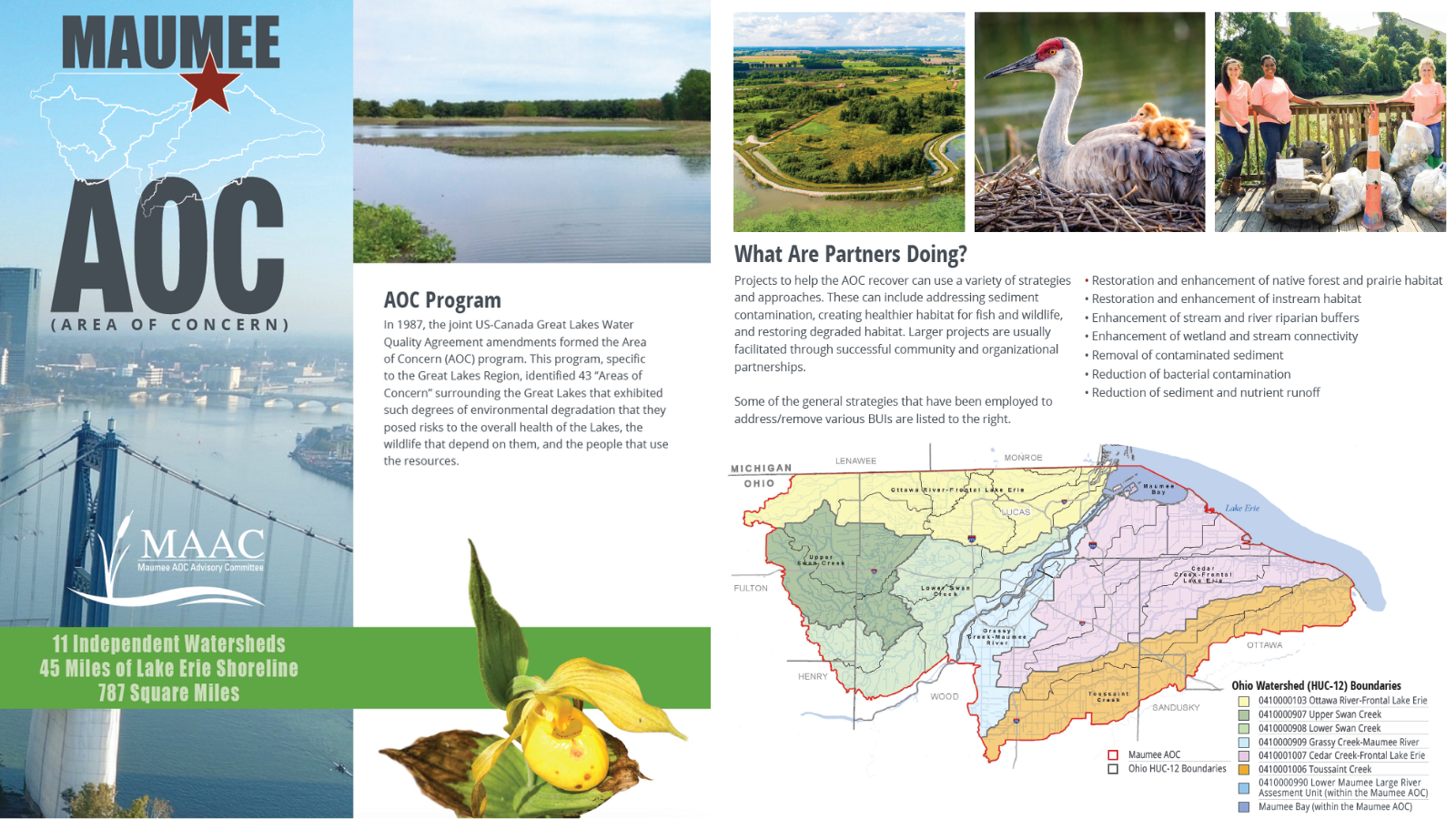
In 1990, the Maumee AOC Advisory Committee identified 10 BUIs that needed to be addressed. With the removal of the aesthetics impairment, now three BUI’s have been addressed including “added costs to agriculture or industry,” and “restrictions on fish and wildlife consumption” BUIs. These beneficial use impairments have been removed because of restoration goals being met across the 787 square mile AOC which includes several watersheds draining to Lake Erie.

In May 2023, OLEC and Ohio EPA invited public comments as part of the removal recommendation process. A response to the public comments is provided in the final BUI removal recommendation along with a letter of support by the Maumee AOC Advisory Committee. OLEC and Ohio EPA will continue to work toward the removal of the remaining BUIs with local AOC partners. As each BUI removal goal is met, OLEC, in partnership with Ohio EPA, will notify the community to seek public input and submit additional BUI removal recommendations to U.S. EPA.

Photo Credit: Bryce Blair Jr, via Removal Recommendation for Degradation of Aesthetics Beneficial Use Impairment in the Maumee AOC

BUI 11 Removal Package Recommended for Approval

An photo of Blue Grass Island channel on the Maumee River.

The Ohio Lake Erie Commission and Ohio EPA are recommending the removal of BUI 11, Degradation of Aesthetics, in the Maumee Area of Concern. At the May MAAC meeting, the Committee will be asked for concurrence with the recommendation before it moves to US EPA and the International Joint Commission for approval. A public comment period will take place in May, so watch Maumee AOC social media for an announcement.

The Ohio Lake Erie Commission and Ohio EPA made this recommendation because the conditions in previously impaired Maumee AOC waterways now meet restoration criteria. This means that the Maumee AOC has addressed previously observed ongoing occurrences of sludge deposits, oil sheens, scum and other objectionable materials; specifically, materials that produce color, odor, or other nuisances.

BUI 11 is the third beneficial use impairment to be recommended for removal among the initial 10 BUIs identified as impaired in the Maumee AOC. The first was BUI 1: Added Costs to Agriculture or Industry (removed in 2015) and the second was BUI 1: Restrictions on Fish and Wildlife Consumption (removed in 2022.)

Project Feature: Beach Improvements at Maumee Bay State Park

An photo of Blue Grass Island channel on the Maumee River.

Maumee Bay State Park is a 1,336-acre public recreation area on the shores of Lake Erie. In 2021, work began on the park’s inland lake swimming beach to address BUI 10: Beach Closings. Persistent, elevated fecal indicator bacteria frequently cause this beach to have an advisory posted against it being used for recreation. Studies showed the majority of this bacteria to be from waterfowl feces. The goal of this project is to deter nuisance waterfowl from using this beach and the other areas surrounding the inland lake through habitat modifications. This is the only management action remaining to address BUI 10 within the Maumee AOC.

Project objectives include stabilizing 850 feet of shoreline and planting 21 acres of pollinator and native grasses. Replacing turf grass with native plants will creatie a visual and physical barrier between the main lake shore and the inland swimming beach, to deter waterfowl from congregating.

Lowering bacteria from waterfowl feces on the beach reduces the likelihood of beach closings, increasing recreational opportunities for park visitors. This spring, project work continues with planting seed and controlling invasives.

To learn more about the status and trends for BUI 10, use the DMDS to view bacterial postings and algal toxin postings by year. The DMDS also has charts tracking Maumee Bay State Park beach advisory days per year.

This project is also featured in Beach and Wetland Improvements at Maumee Bay State Park on www.maumeeaoc.org.

Hill Ditch Restoration at Toledo NST Center

Hill Ditch Restoration at Toledo Natural Science Technology Center: This project focuses on creating instream and floodplain habitat for fish and benthos by stabilizing streambanks against erosion.

Maumee River Islands Restoration Plans – Public Open House

The Toledo-Lucas County Port Authority, City of Toledo, and the Maumee AOC Advisory Committee (MAAC) are hosting a public open house to share new and refined draft designs and to seek input for these plans intended to help improve water quality and aquatic habitat while helping to restore and protect Clark Island and Delaware/Horseshoe Islands. These islands are in the Maumee River near Walbridge Park and are owned by the City of Toledo.

Tuesday, March 14, 2023
4:00 p.m. – 6:30 p.m.
Walbridge Park Shelter House
2761 Broadway St., Toledo

Plans for the H2Ohio-funded activities at and near the islands are focused on nutrient reduction through the settling of sediment and uptake from plants. Great Lakes Restoration Initiative-funded planning activities are focused on improving habitat for fish and benthos (small organisms that live on the river bottom). Island habitat in the Maumee River is particularly important for the prosperity of fish and benthos.

Engineering and design activities are being completed under the direction of the collaborating and funding agencies and are led by engineers and scientists at Verdantas (formerly Hull & Associates), with input from several specialists, including modeling experts at LimnoTech and biologists at the University of Toledo.

If you attended the September open house or viewed the draft designs shared at that event, the Clark Island design reflects minor refinements. The Delaware/Horseshoe Islands draft project design is now much more fully designed building upon the preliminary design prepared by the U.S. Army Corps of Engineers in 2021-2022.

We hope you can join us on March 14th anytime between 4:00 p.m. and 6:30 p.m. to learn more about these projects and to provide your thoughts for the design team’s consideration. For more information about these projects or this event, please visit www.toledoport.org/projects/clark-and-
delawarehorseshoe-islands-restoration-projects/ or call or email Jenny Carter-Cornell, APR, (567) 200-4355 or [email protected]. Thank you, and we hope to see you at Walbridge Park!

MaumeeIslandsOpenHouseLogos

Maumee Islands Recent and Draft Restoration

GLRIDraftDesign

H2OhioDraftDesign

Management Action Project Status Going Into 2023

Last year was a productive one for management action projects securing funding and reaching completion. For Wildlife Management Action Projects, 75% (15 of 20) were complete by the end of 2022, expanding habitat for key species in the Maumee AOC, such as the sandhill crane and wild turkeys. For Aquatic Management Action Projects, combining both the AOC-funded and non-AOC funded projects, 90% of AquaMAPs are fully funded. Looking ahead, several more AquaMAPs will have design and construction underway in 2023.

We are proud to share our AOC’s progress toward BUI removal and looking forward to what this year brings.

12


3

Project Feature: Maumee Bay Wetland Restoration

4Maumee Bay State Park is a 1,336-acre public recreation area on the shores of Lake Erie. In 2022, construction got underway and completed on a wildlife habitat management action project focused on enhancing the park’s wetlands.

This project enhances about 130 acres of critical wildlife habitat around the shores of Lake Erie, an area that has been dramatically altered by industry and agriculture. In particular, the Maumee Bay State Park wetland has been degraded by the invasive reed, phragmites. This project enables water level control for invasive species management, which will facilitate the return of native marsh vegetation and high-quality fish and wildlife habitat.

Project objectives included improving 4,362 linear feet of a rock dike wall originally constructed in 1982 and installing a fish-friendly water control structure to enable water level control and allow fish passage to and from the wetland.

Maumee Bay State Park’s wetland restoration project was led by the Ohio Department of Natural Resources (ODNR) – Division of Parks and Watercraft, in partnership with The Nature Conservancy. It was funded by a grant from Great Lakes Restoration Initiative (GLRI) with additional funds from H2Ohio.

A more robust project feature will be up on maumeeaoc.org later this year.