The Maumee Area of Concern (AOC) has reached an important milestone in its environmental restoration efforts. The U.S. Environmental Protection Agency (EPA) has officially approved the removal of the Beach Closings (Recreational Use) Beneficial Use Impairment (BUI), recognizing years of progress in improving water quality in the lower Maumee River and the streams that flow into Maumee Bay State Park.
This marks the fifth of the 10 BUIs identified for the Maumee AOC to be removed, bringing the community halfway toward addressing all identified impairments.
The milestone reflects years of collaboration and investment by local, state, and federal partners to improve water quality and address environmental conditions that have limited recreational opportunities at nearby beaches and along the Maumee River.
Over the past five years, officials have evaluated beach advisory trends and found evidence of improving water quality. This work has also helped identify sources of bacterial contamination in recreational waters, including waterfowl congregating in certain locations, such as the inland beach at Maumee Bay State Park.
To address these concerns, a targeted project was completed to discourage waterfowl from gathering in problem areas. These efforts, along with other restoration initiatives, have contributed to progress in improving recreational water quality throughout the Maumee AOC. With support from the Great Lakes Restoration Initiative (GLRI), the City of Oregon also completed projects to widen ditches and restore streams. These improvements help filter sediment, nutrients, and bacteria before they reach Maumee Bay, promoting healthier waterways and reducing the transport of pollutants into recreational waters (see images below).
Together, these projects demonstrate the value of coordinated, science-based restoration efforts in addressing water quality challenges and protecting the region’s natural resources.
The Ohio Lake Erie Commission and Ohio EPA continue to work with local communities and AOC partners to address remaining impairments and advance restoration throughout the Maumee AOC.
The removal of this impairment demonstrates what sustained partnerships, targeted investments, and community commitment can accomplish. As restoration efforts continue, the Maumee AOC remains focused on improving water quality, protecting aquatic resources, and supporting healthier beaches, rivers, and streams for future generations.
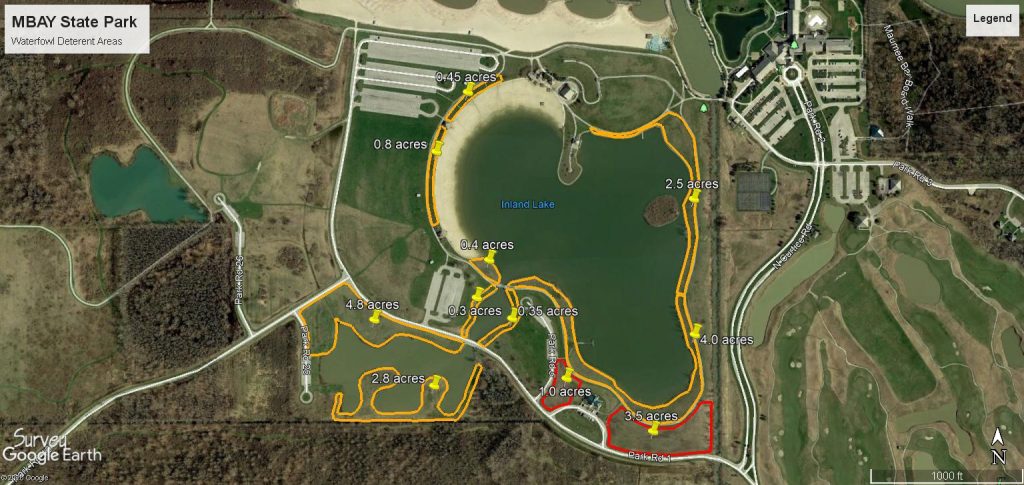
This aerial map of Maumee Bay State Park identifies designated waterfowl deterrent areas around the inland lake and surrounding ponds, with highlighted boundaries and acreage measurements. These illustrate the targeted management efforts to discourage waterfowl from congregating.
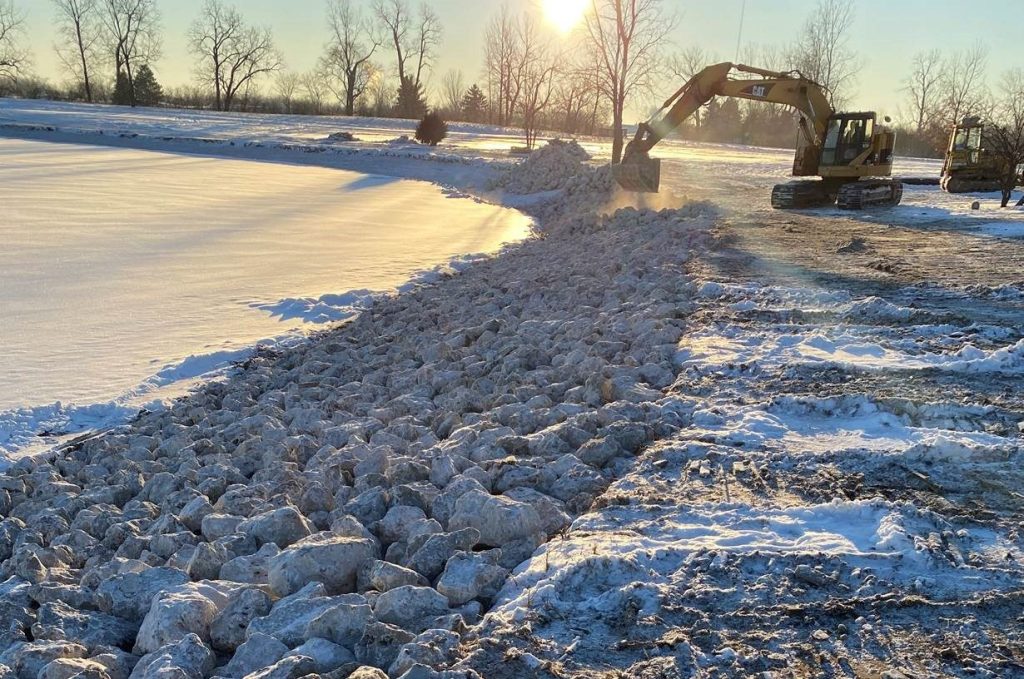
Maumee Bay State Park has undergone 850 feet of shoreline stabilization to reduce erosion and protect the shoreline.